
Yuriko Igarashi Kitamura
She developed her own unique technique—dye-painting on rice paper—which became her specialty. The process evolved progressively, moving from batik on cotton to working with watercolour, fabric dye, and wax on rice paper, eventually refining to remove fabric dye while maintaining the wax resist method for controlled application.
Batik on cotton and graphite drawings on paper…
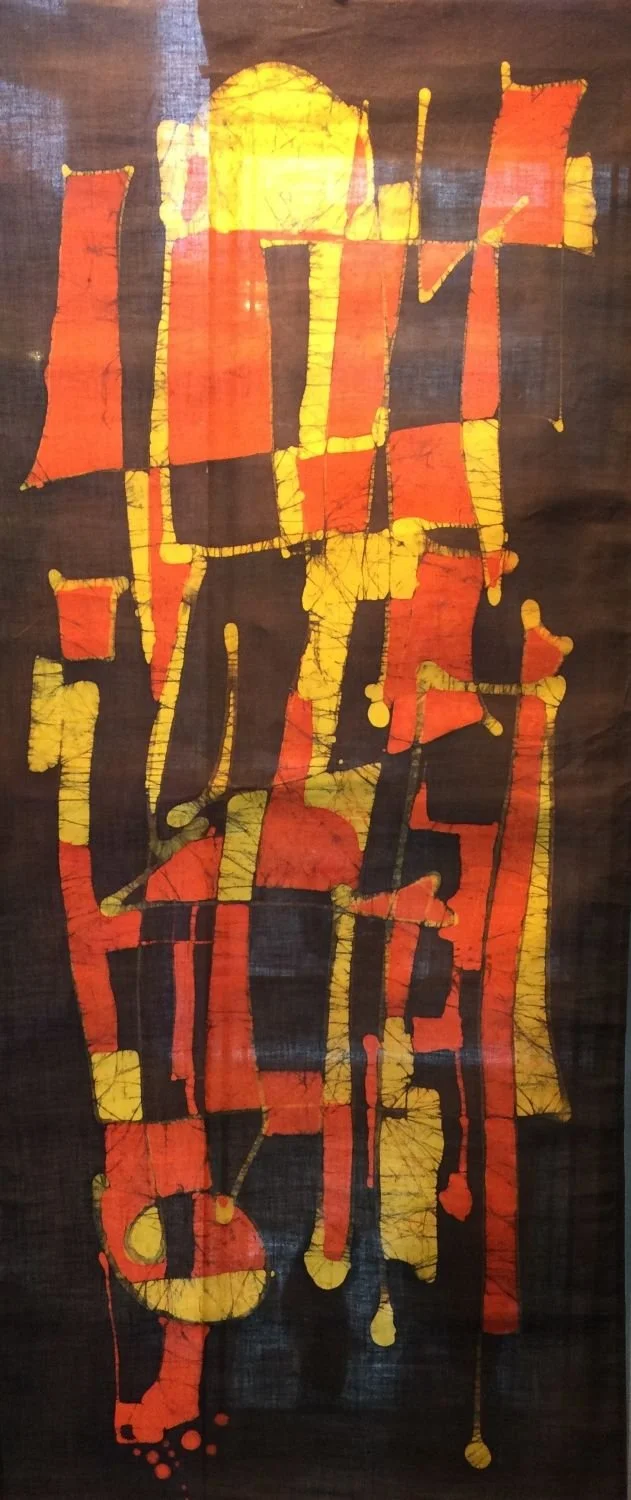
Untitled (abstract) #2, 1979, batik on cotton, wall hanging, 50 x 22 inches (127 x 56 cm), $1100 Cdn.

Three Vases #3, 1979, batik on cotton, 26.5 x 23 inches (87.5 x 58.5 cm), unframed, $750 Cdn.
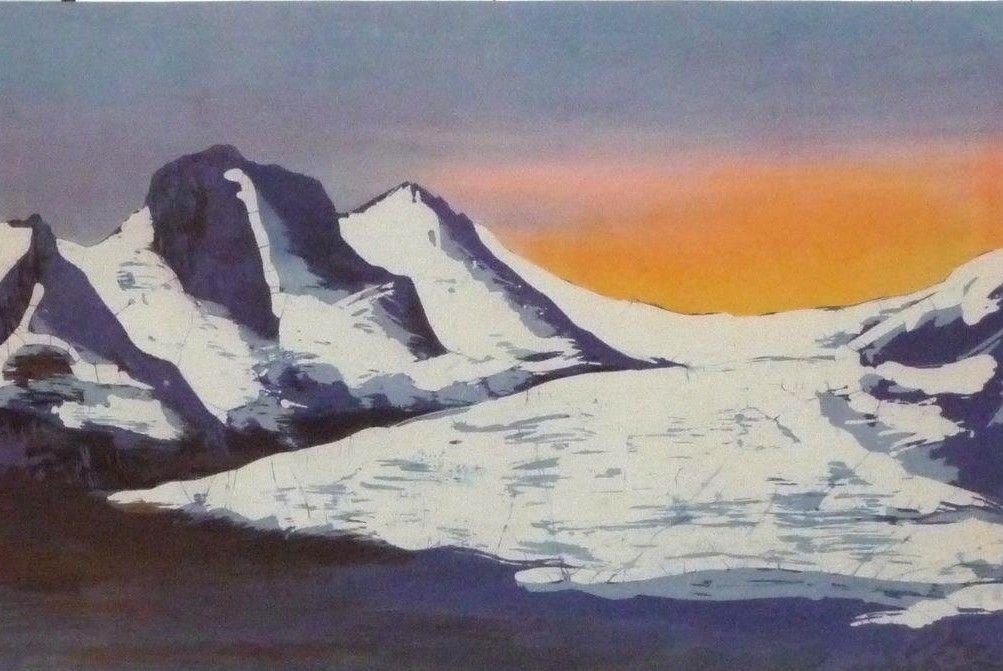
Columbia Ice Field #3, 1980, batik on cotton, 28 x 43 inches (71 x 109 cm), unframed, $1100 Cdn.
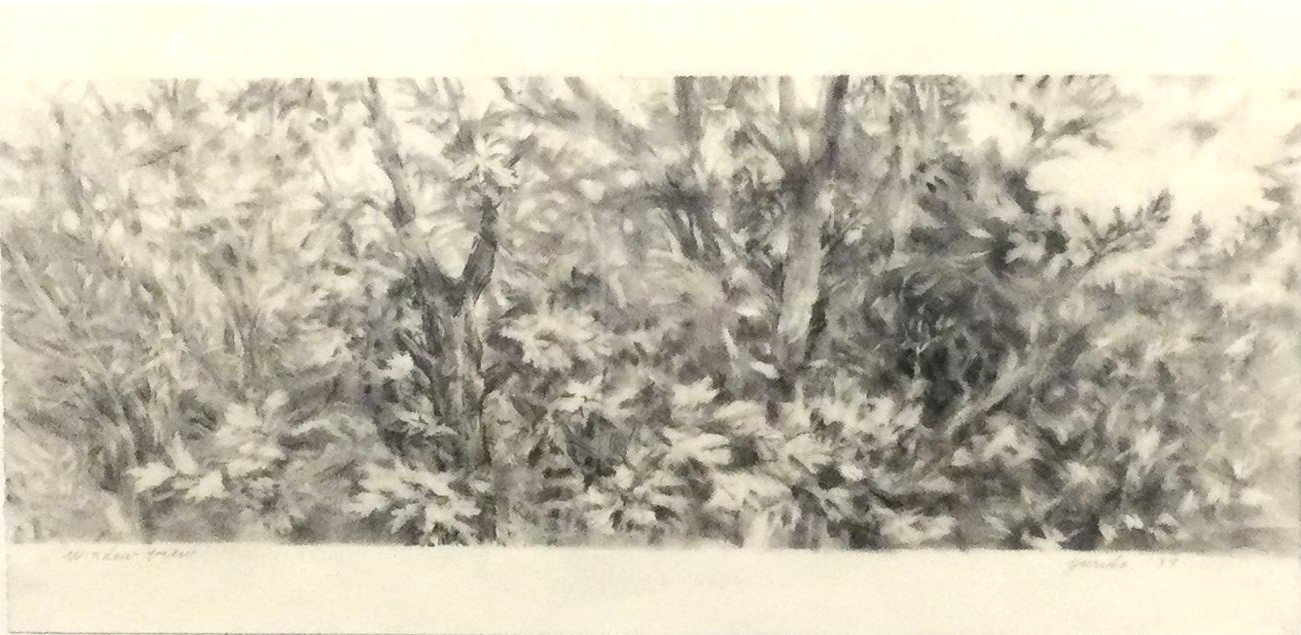
Maple Tree From Bedroom Window (#22.1), 1987, graphite on paper, 9.5 x 26 inches (24 x 66 cm), framed, $1100 Cdn.
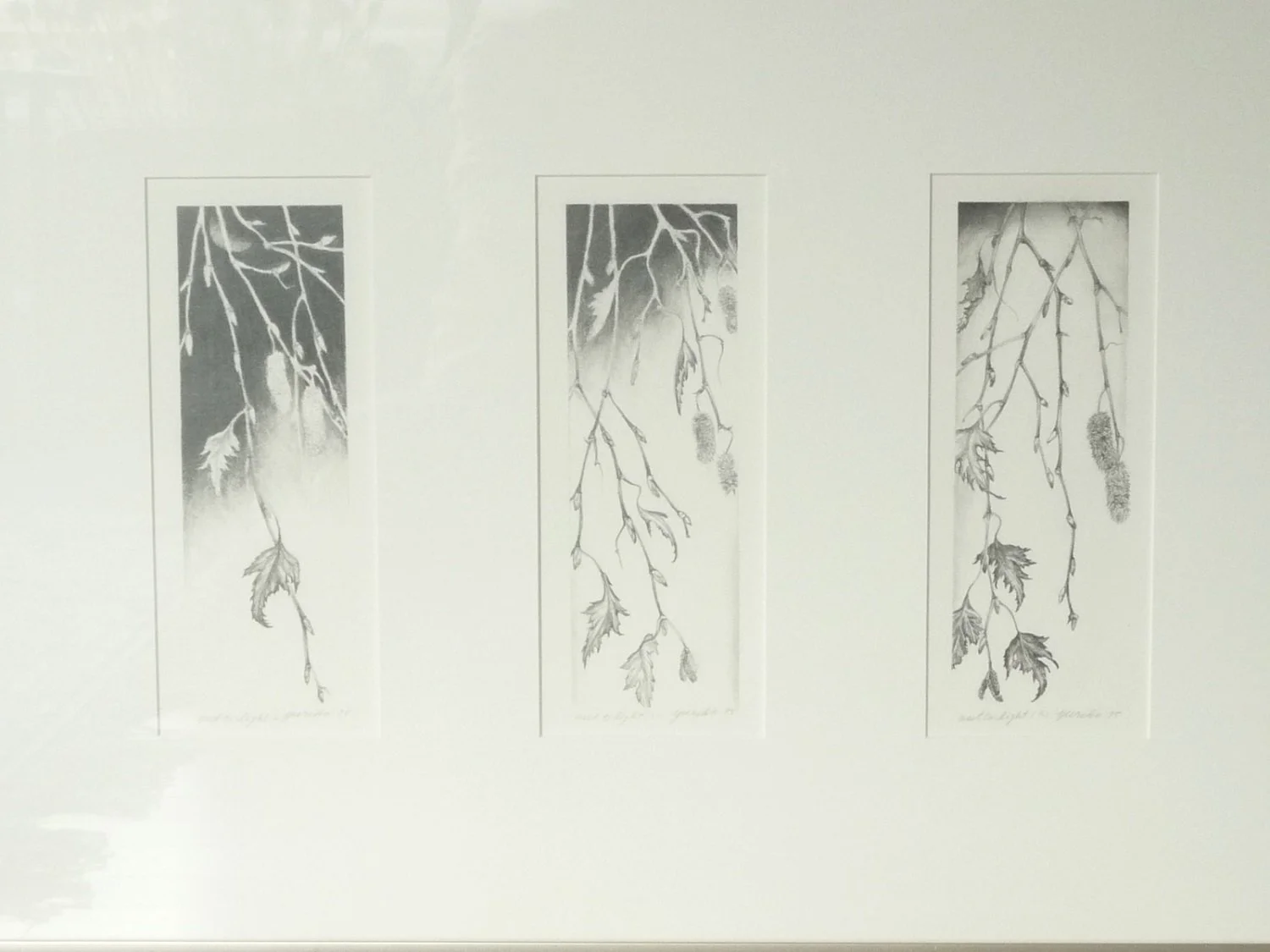
Birch Tree (Light Behind, Dark In Night, Light Left), 1995, graphite drawing on Rising Stonehenge paper, 9 x 3 inches (23 x 8 cm) each with 3 works framed together, $1100 Cdn

Wrap & Left (Casa Blanca Lily), 1995, graphite drawing on Rising Stonehenge paper, 19.5 x 25.5 inches (49.5 x 65 cm), framed, $1400 Cdn.

Christmas Cactus #2, 1997, graphite and watercolour on paper, 3x3 inches (8x8 cm), framed, $350 Cdn.

See More Drawings by Yuriko
Watercolour on paper…

Apricot Tulip In Basket (#89.1), 1989, watercolour on paper, 14 x 20 inches (35.5 x 51 cm), framed, $1300 Cdn

Nasturtium (#89.2), 1989, watercolour/paper, 22 x 15 inches (56 x 38 cm), framed, $1475 Cdn.

Orchid #1 (Shadow Series), 1990, watercolour on paper, 22 x 30 inches (56 x 76 cm), framed, $1975 Cdn.

Heliconia (Shadow Series) #90.4, 1990, watercolour/paper, 7 x 16 inches (18 x 40.5 cm), framed, $995 Cdn.

Cattleya Trianae (Flor de Mayo Orchid) #93.5, 1993, watercolour/paper, 15 x 22 inches (38 x 56 cm), framed, $1475 Cdn

Sunflower With Apricot (Sketchbook), 1993, watercolour on Arches 140 lb paper, 21 x 13.5 inches (53.5 x 34 cm), framed, $1300.00 Cdn.

Parrot Tulip In A Basket (#94.6), 1994, watercolour/paper, 12 x 16 inches (30.5 x 40.5 cm), framed, $1175 Cdn.

Casablanca Lilies With Shadow (Shadow Series #95.50), 1995, watercolour on paper, 22 x 30 inches (56 x 76 cm), framed, $1975 Cdn.

Peonies In Glass (Shadow Series #95.52), 1995, watercolour on paper, 22 x 30 inches (56 x 76 cm), framed, $1975 Cdn.

Three Pears, 2002, watercolour on Arches 140 lb paper, 7 x 7 inches (17.5 x 17.5 cm), framed, $500 Cdn.

Christmas Cactus, c.2002, watercolour on Arches 140 lb paper, 7.5 x 7.5 inches (18.5 x 18.5 cm), framed, $500 Cdn.

Fairmont Trip, 1995, watercolour sketch on folded Arches 140 lb paper, 10 x 22 inches (25.5 x 56 cm), framed, $1100 Cdn.
Landscape - watercolour, fabric dye, wax on rice paper
Yuriko's work captures timeless serenity through landscapes and florals rendered with intense detail and remarkable technical control. Early landscapes consistently employ wax resist to manage watercolour on highly porous rice paper.

Moonlight Through Cloud (Cathedral Mountain, Lake O'Hara), 2009, mixed media (wax & watercolour) / sekishu 30 gm rice paper, 25 x 38 inches (63.5 x 97 cm), framed, $3800 Cdn.

North Saskatchewan River Ice Forming, mixed media (wax & watercolour) on sekishu white 30 gm kozo, 38x24 inches (98 x 61 cm), framed, $3200 Cdn.

Silverhorn, Moonlight Through Cloud, 2002, mixed media (wax & watercolour) / sekishu 30 gm rice paper, mounted on board, 24 x 36.5 inches (61 x 93 cm), framed, $2700 Cdn.

Snow Mountain, 1988, mixed media (wax & watercolour) / sekishu 30 gm rice paper, 24 x 33 inches (61 x 84 cm), framed, $2400 Cdn.

Rundle Mountain From Johnson Lake (Banff), 2003, mixed media (wax & watercolour) / sekishu 30 gm rice paper, 19 x 25 inches (48 x 84 cm), framed, $1600 Cdn.

Moonrise Mountain (Athabasca), mixed media (wax & watercolour) on sekishu white 30 gm kozo, 15x28 inches (38 x 71 cm), framed, $1600 Cdn

Ice Field, Water Series, mixed media (wax & watercolour) on sekishu white 30 gm kozo, 13x31 inches (33 x 79 cm), framed, $1400 Cdn.
Florals - watercolour, fabric dye, wax on rice paper
It is a progression from working with watercolour, fabric dye and wax on rice paper to removing the fabric dye from the equation. The florals always retain the use of wax in order to control the application of the watercolour on the very porous rice paper.

Iris Portrait, 1981, mixed media (dye, wax & watercolour) / sekishu 30 gm rice paper, 36 x 24 inches (91.5 x 61 cm), framed, $2700 Cdn.
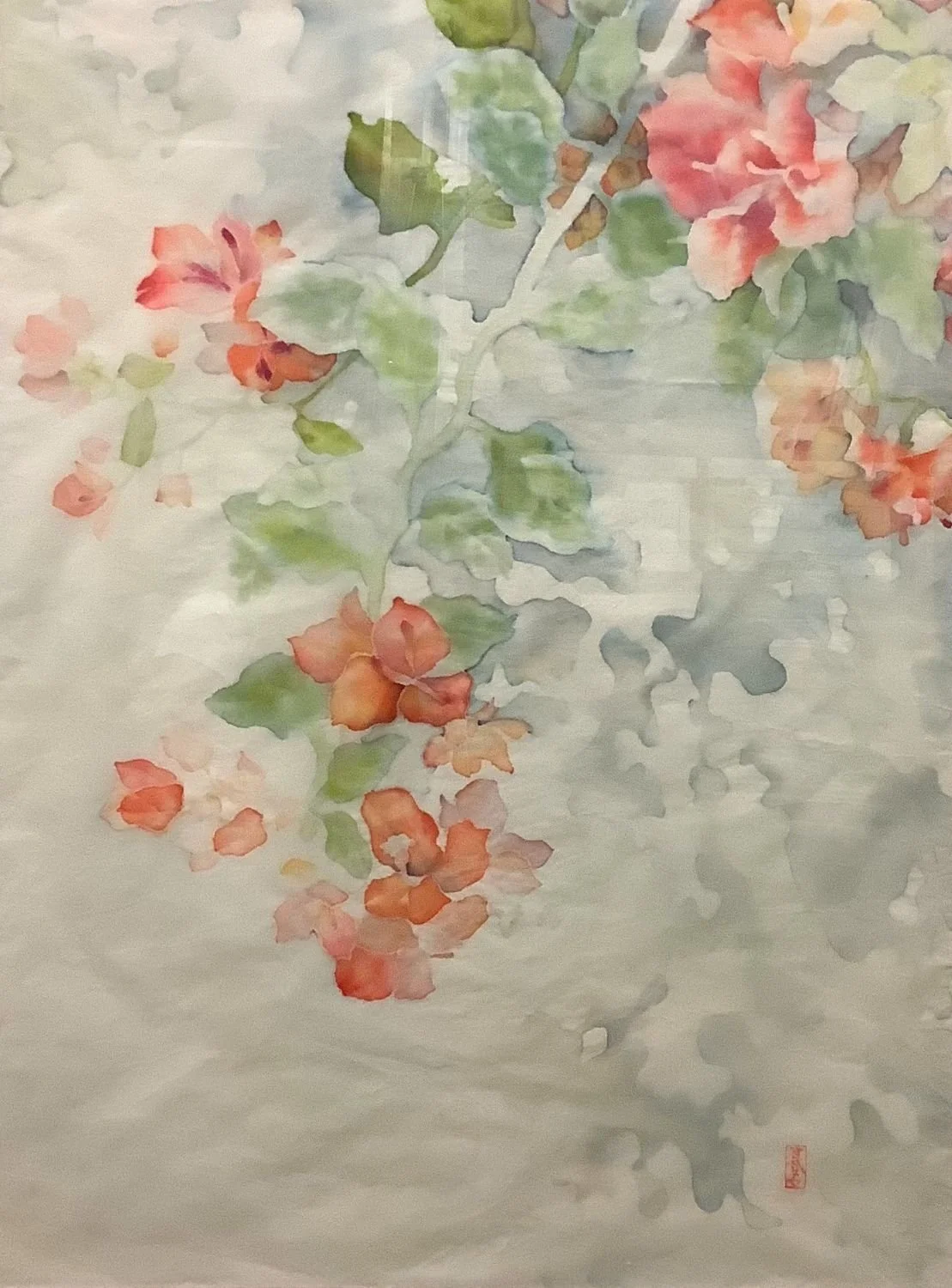
Bougainvillea (fs24.8), 1989, mixed media (wax and watercolour) on sekishu 30 gm rice paper, provenance: Calgary Collection, $1400 Cdn.
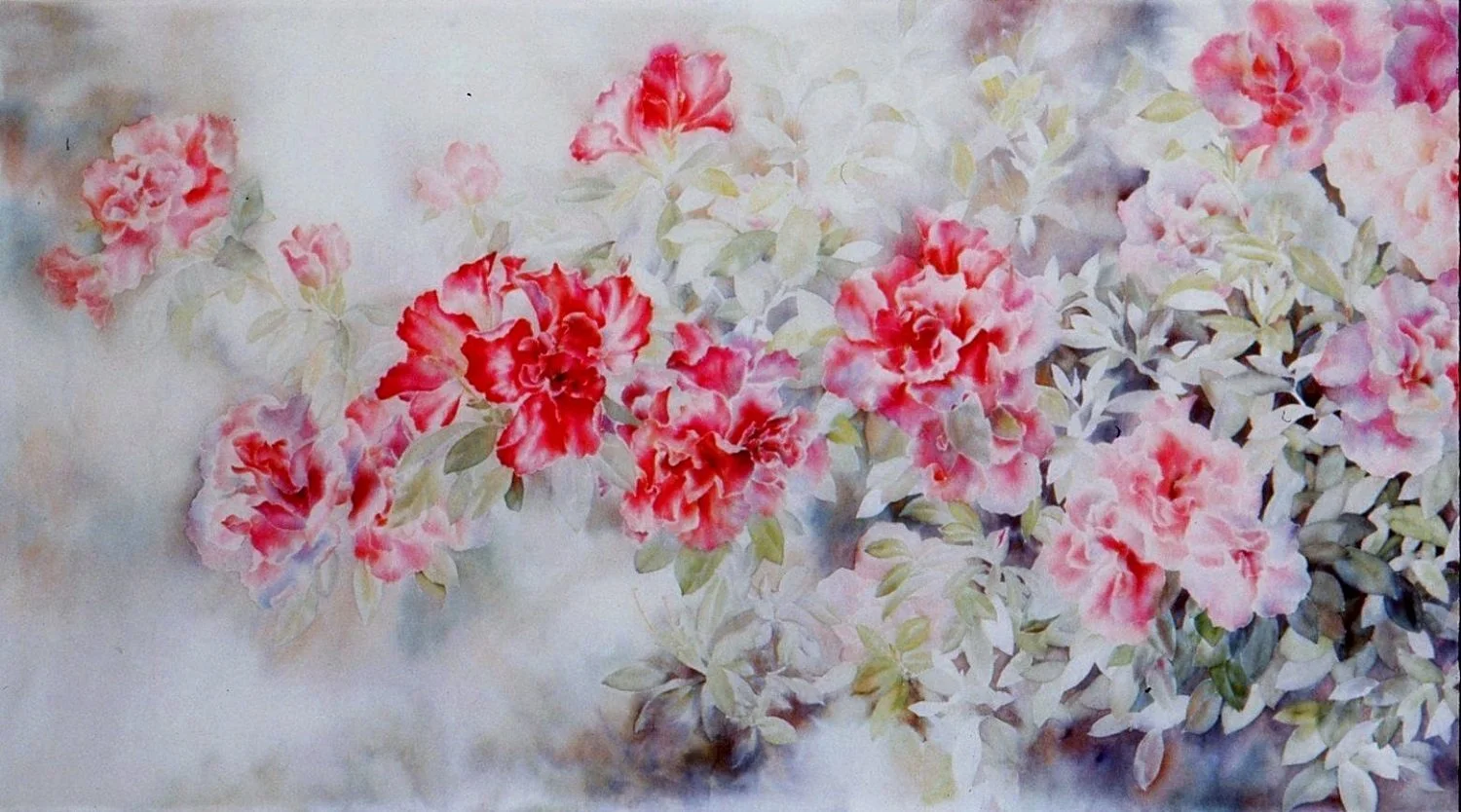
Azeria's Song, 1992, mixed media (wax & watercolour) / sekishu 30 gm rice paper, 36 x 72 inches (91.5 x 183 cm), new framing, $12,600 Cdn.

Rose-Mountain, Dream Series, 1994, mixed media (wax & watercolour) / sekishu 30 gm rice paper, 38.5 x 12 inches (98 x 30.5 cm), framed, $1800 Cdn.

Shadows On The Fence (#66), c.1996, mixed media (wax & watercolour) / sekishu 30 gm rice paper, 20.5 x 32.25 inches (52 x 72.5 cm), framed, $1800 Cdn.

Marsh Marigolds (#24-13-4f), c.1996, mixed media (wax & watercolour) / sekishu 30 gm rice paper, 29 x 14 inches (73.5 x 35.5 cm), framed, $1600 Cdn.

Red Poppies (#24.11.2f), c. 1996, mixed media (wax & watercolour) / sekishu 30 gm rice paper, 24 x 7 inches (61 x 18 cm), framed, $1100 Cdn.

Red Poppies (#24.10.1f), c. 1996, mixed media (wax & watercolour) / sekishu 30 gm rice paper, 24 x 7 inches (61 x 18 cm), framed, $1100 Cdn.

Lilies (#24.17-9f), c.1996, mixed media (wax & watercolour) / sekishu 30 gm rice paper, 38 x 12 inches (96.5 x 30.5 cm), framed, $1800 Cdn.

Tradescantia, 2001, mixed media (wax & watercolour) / sekishu 30 gm rice paper, 38 x 12 inches (97 x 30.5 cm), framed, $1800 Cdn.

Irises (#24.14f), c.1996, mixed media (wax & watercolour) / sekishu 30 gm rice paper, 38 x 12 inches (96.5 x 30.5 cm), framed, $1800 Cdn.

Irises (#24.12f), c.1996, mixed media (wax & watercolour) / sekishu 30 gm rice paper, 38 x 12 inches (96.5 x 30.5 cm), framed, $1800 Cdn.

Lilies Shadow Behind, 2000, mixed media (wax & watercolour) / sekishu 30 gm rice paper, 53 x 26.5 inches (135 x 67 cm), framed, $6000 Cdn.

Tulips Peeking Out (#0102), 2001, mixed media (wax & watercolour) / sekishu 30 gm rice paper, 24 x 17 inches (61 x 43 cm), framed, $1500 Cdn.

Bird Of Paradise With Shadow, 2002, mixed media (wax & watercolour) / sekishu 30 gm rice paper, 23.5 x 37 inches (60 x 94 cm), framed, $3800.00 Cdn.

Light Shines After A Hail Storm, 2003, wax & watercolour on mitsumata 45-50 gm rice paper, 24 x 19 inches (61 x 48 cm), framed, $1600 Cdn.

Bloom Together, 2004, mixed media (wax & watercolour) on sekishu 30 gm rice paper, 19.25 x 21.5 inches (49 x 54.5 cm), framed, $1500 Cdn.

Moving Among A Star #2, 2004, mixed media (wax & watercolour) / sekishu 30 gm rice paper, 24 x 27 inches (61 x 69 cm), framed, $1800 Cdn.

Tulips Floating - Interior, 2005, mixed media (wax & watercolour) / sekishu 30 gm rice paper, 27 x 53.5 inches (69 x 136 cm), framed, $6000 Cdn.

Memories Series-Life Through River-Iris, mixed media (wax & watercolour) on sekishu white 30 gm kozo, 38x24 inches (96.5 x 61 cm), framed, $3200 Cdn.

Memories Series-Life Through River-Iris, mixed media (wax & watercolour) on sekishu white 30 gm kozo, 38x24 inches (96.5 x 61 cm), framed, $3200 Cdn.

Orchid in Interior, mixed media (wax & watercolour) on sekishu white 30 gm kozo, as featured in AlbertaViews Magazine, 24x39 inches (61 x 99 cm), framed, $3200 Cdn.

White Lillies (#91), 2006, mixed media (wax & watercolour) / sekishu 30 gm rice paper, 19 x 25 inches (48 x 63.5 cm), framed, $1600 Cdn.
Landscapes - watercolour on rice paper and mixed media pieces…
Some landscape pieces forego wax entirely, relying solely on the artist's skill—a deep understanding of pigment saturation in the brush and the moisture level of the paper.
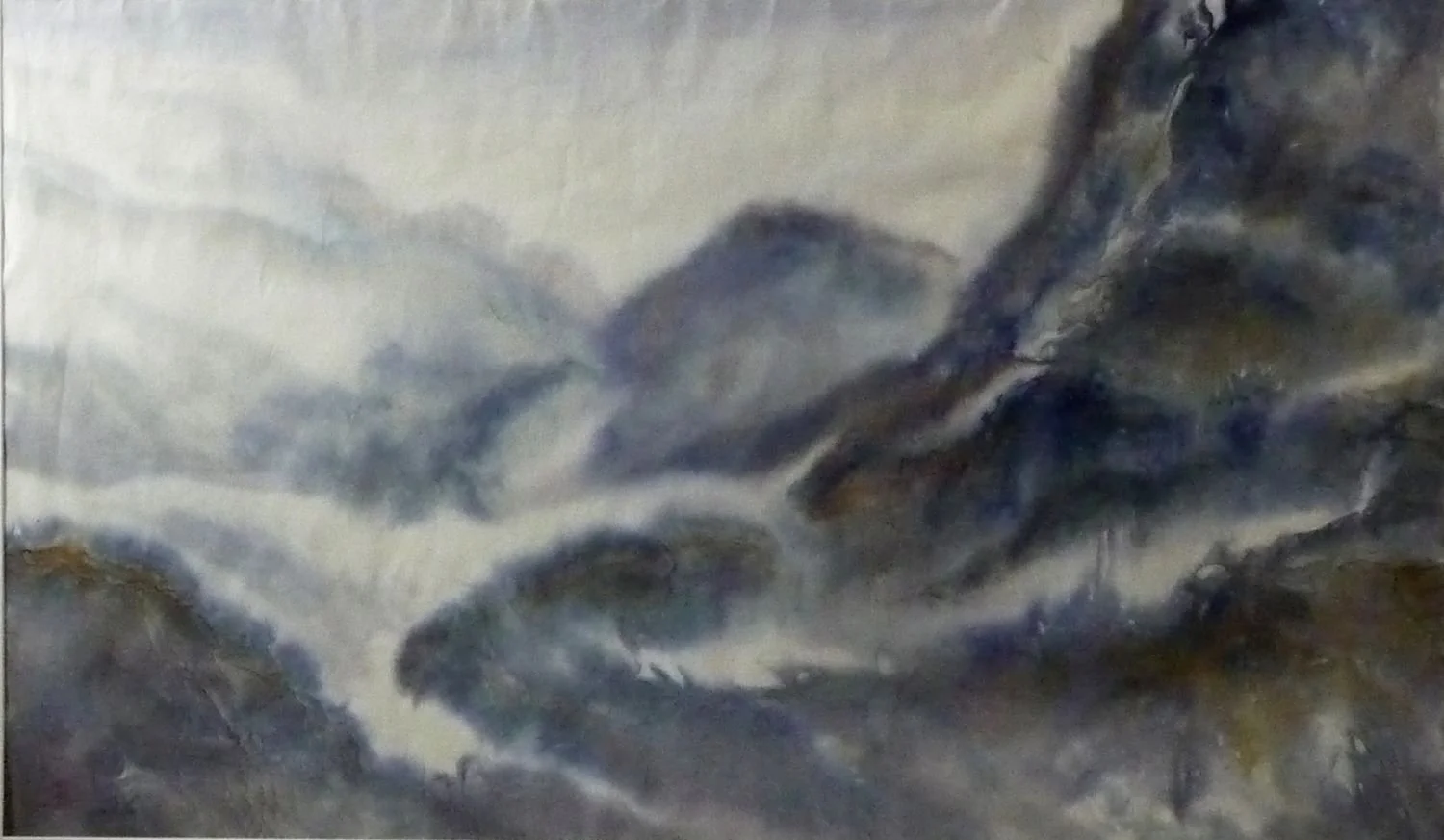
Reverie Series - Mountain New Ways, 1999, watercolour on mitsumata 45-50 gm rice paper, 27 x 46 inches (69 x 117 cm), framed, $4500 Cdn.
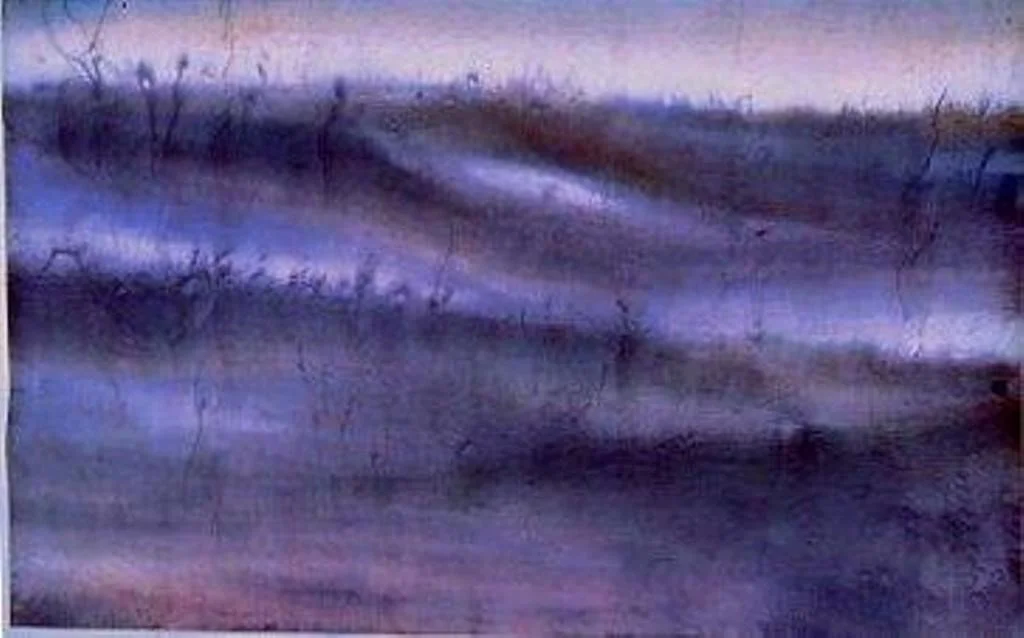
Lavender Light, watercolour on sekishu white 30 gm kozo paper, 27.5 X 45.5 inches (70 x 115.5 cm), framed, $3400 Cdn.

Forest In Rush, n.d., watercolour on sekishu white 30 gm kozo paper, 24 x 37 inches (61 x 94 cm), framed, $3200 Cdn.
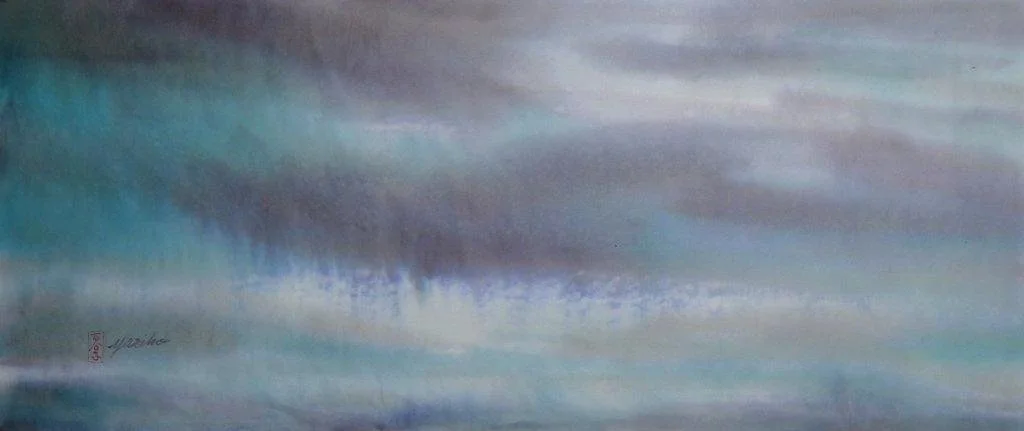
Storm Approach, Water Series, watercolour on sekishu white 30 gm kozo, 13x31 inches (33 x 79 cm), framed, $1400 Cdn.
Reverie Series - Lake Afternoon Sunset #33, 2000, watercolour / mitsumata 45-50 gm rice paper, 13.5 x 14 inches (34 x 35 cm), framed, $700 Cdn.

Reverie Series - Dawn #1, 2003, watercolour / mitsumata 45-50 gm rice paper, 13.5 x 13.75 inches (34 x 35 cm), framed, $700 Cdn.

Forest Fire, 2015, mixed media (acrylic & sumi ink) on board, 37 x 25 inches, framed, $2700 Cdn
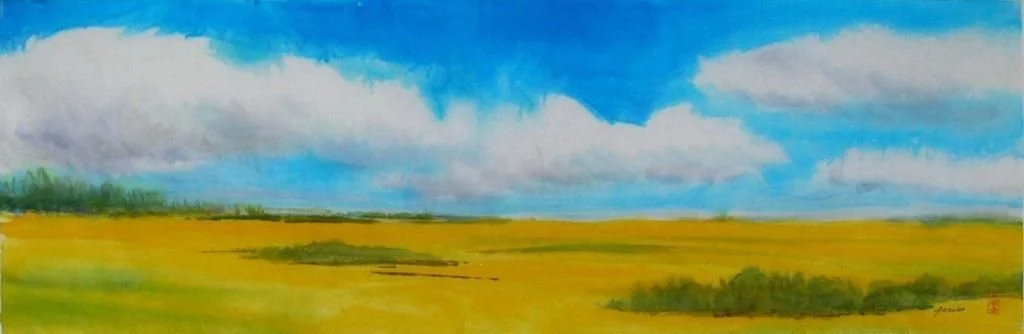
Canola Field 2, watercolour on sekishu white 30 gm kozo, 13.5 x 41 inches (34.5 x 104 cm), framed, $2400 Cdn.
Her career as an artist began in Canada.
Yuriko's work captures timeless serenity through landscapes and florals rendered with intense detail and remarkable technical control. Her florals consistently employ wax resist to manage watercolour on highly porous rice paper, while some landscape pieces forego wax entirely, relying on skill alone. Working primarily on location in watercolour and pencil sketch, she strives to honour simplification, decorativeness, and nature's enduring qualities. As David Kung noted in The Contemporary Artist in Japan, these same qualities—"simplification, decorativeness and serenity"—have influenced Japanese art throughout its history, and they abound in Yuriko's body of work. Her stated aim—to capture "the timeless serenity, the power and endurance of rugged mountains, the delicacy of a flower, or the essence of the human figure"—remains evident across four decades of dedicated practice.
Yuriko Igarashi Kitamura (Japanese/Canadian, 1939-) is a celebrated artist whose journey from Hokkaido, Japan to Alberta, Canada reflects both personal transformation and artistic evolution. After completing a BSc in Pharmacology in Japan, she moved to the United States in the early 1960s before settling in Canada in the mid-1960s. Her artistic career flourished in Alberta, where she became widely recognized as the originator of dye-painting on rice paper—a distinctive technique she taught through the University of Alberta, Faculty of Extension for over fourteen years, alongside numerous workshops across the province. Now in her late eighties, Yuriko remains a respected figure in Canadian art circles.
Her artistic development emerged from disciplined experimentation and cross-cultural influence. Beginning with batik fabric work using wax resist and graphite drawings on paper, Yuriko enrolled in art courses at the University of Alberta under Mr. Harry Savage. His introduction to Emile Nolde's watercolour approach sparked her experimentation with watercolour on rice paper. Through considerable trial and error, she developed her own unique technique—dye-painting on rice paper—which became her specialty. The process evolved progressively, moving from batik on cotton to working with watercolour, fabric dye, and wax on rice paper, eventually refining to remove fabric dye while maintaining the wax resist method for controlled application.